Why did Paul write letters to the early communities?
The Letters of St Paul make a significant contribution to the New Testament, the thirteen letters attributed to Paul being the dominant writings after the four gospels[1] as “an essential foundation for Christian theology”[2]. Paul wrote letters to the communities that he founded in response to community questions and moral lapses, giving encouragement and advice based on the gospel[3]. The contents of each letter varied significantly due to the problems experienced by specific communities differing, resulting in each letter being distinctive[4]. A reiteration and development of ethical instructions for Christian living is a consistent message across all letters. Letters encouraged converts to persevere, clarified points of confusion, provided further instruction, and correction for those who had gone astray[5].
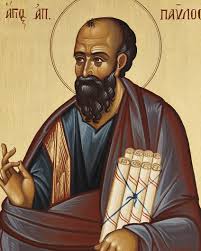 Paul’s letters followed a structure common for the time of writing[6]. The address serves a greater purpose than an introduction, Paul regularly alluding to the themes of the letter, “What is uppermost on his mind”[7].The Letter to the Philippians presents no major concerns regarding the community, instead revealing the unique pastoral relationship that Paul has with a community that he founded and loves[8]. Paul longs to be with them, holding them in his heart[9]. An emphasis is placed in remaining joy filled amid suffering[10] and the necessity of unity of minds and hearts inside the community[11]. Paul expresses his desire for the Philippians to experience the “fullness of Christian life: love, knowledge, discernment, good deeds flowing from righteousness, and vindication at the last judgement”[12]. These themes are developed in the area of Christology, ecclesiology, and ethics in the specific context of the community throughout the main body of the letter[13].
The main body teaches and develops the themes from the greeting separated into two distinct sections: teaching and exhortations[14]. Paul is a Pastoral theologian attempting “to understand and articulate the meaning of what God has done in Jesus Christ”[15], by teaching theological concepts not properly understood in the context of the challenges being faced by the community and exhorting the practical consequences, “morality or Christian way of behaving…based on this teaching”[16].
Arguably the most significant contribution of the Letter to the Philippians is the hymn[17]. The hymn “shows that at a very early time in Christian history Christ Jesus was celebrated as sharing the form of God and as a worthy of the divine title “Lord”[18]. It is the theological foundation to the letter, the themes of unity amongst the community, the virtues of communal living, reconciliation amongst members, justification in faith by Jesus’ deeds and not by the outward physical signs of men, and rejoicing amongst suffering[19] are connected and resolved in Paul’s mind through the Cross of Christ “specifically his death and resurrection”[20] through which “everything is a loss because of the surpassing value of knowing Christ Jesus”[21].
[1] Horrell, An Introduction to the Study of Paul, 1.
[2] Daniel Harrington, Paul’s Prison Letters: On Paul’s Letters to Philemon, the Philippians and the Colossians, (New City Press, 1997), 14.
[3] Harrington, Paul’s Prison Letters, 14.
[4] Horrell, An Introduction to the Study of Paul, 44.
[5] Horrell, An Introduction to the Study of Paul, 82.
[6] Charpentier, How to Read the New Testament, 49.
[7] Murphy-O’Connor, Paul a Critical Life, 266.
[8] Harrington, Paul’s Prison Letters, 10.
[9] Philippians 1:7-8 (NRSVCE).
[10] Philippians 1:4 (NRSVCE).
[11] Philippians 1:7; 2:2 (NRSVCE)
[12] Harrington, Paul’s Prison Letters, 37.
[13] Harrington, Paul’s Prison Letters, 14.
[14] Charpentier, How to Read the New Testament, 49.
[15] Harrington, Paul’s Prison Letters, 14.
[16] Harrington, Paul’s Prison Letters, 49.
[17] Philippians 2:6-11 (NRSVCE)
[18] Harrington, Paul’s Prison Letters, 75.
[19] Philippians 2:3; 4:8-9; 4:2-3; 3:2-3; 1:12-19 (NRSVCE).
[20] Horrell, An Introduction to the Study of Paul, 61.
[21] Philippians 3:8 (NRSVCE).