What is the “canon” of the New Testament?
The “Canon of the New Testament” is the catalogue of “twenty-seven books…written in the early years of the Church in response to the life, death and resurrection of Jesus”[1]. Recognised with the forty-six books of the Old Testament as the “Canon of Scripture”, the Church has discerned by its apostolic tradition which writings are included in the list of sacred books[2]. The Canon of Scripture “speaks of Christ, and…is fulfilled in Christ”[3]; the “New Testament lies hidden in the Old and the Old Testament revealed in the New”[4]. This demonstrates a unity between the Old and New Testaments, in the preparation, prophecy, revelation, and fulfilment of God’s plan for redemption and salvation of all people “in the fullness of time in the person of his incarnate Son”[5]. Both are accepted and venerated as being inspired writings, with God as the author[6]laying the foundation of “the rule of faith”[7] for the faithful.
The New Testament consists of four main parts: Gospels, Acts, Letters, and Revelation[8]. The books are not chronological, but ordered to follow the life of Jesus, explore the beginnings and expansion of the Church, highlighting issues and problems in early Christianity before presenting the “End of Times”[9]. In doing so, it reveals the “New Covenant established between God and humanity by Jesus to fulfil the Old Covenant or Mosaic Law”[10].
The Gospels are the “heart of all Scriptures because they are our principal source for the life and teaching of the Incarnate Word”[11]. Matthew’s Gospel provides the connection between Old and New Testaments making it the appropriate book at the beginning of the New Testament[12]. The Acts of the Apostles is a continuation of the Gospel of Luke and follows the story of growth of the Apostolic Church[13]. The Letters, also known as Epistles, consists of twenty-one letters addressing various local problems or issues faced by specific communities, individuals, and the broader Church. They are organised into three sections rather than chronologically: (1) Thirteen letters attributed to Paul to specific communities and individual leaders; (2) Hebrews, a biblical sermon interpreting Jesus through the Old Testament; (3) Seven Catholic Epistles. The Book of Revelation, “a highly symbolic narrative that interprets a historical crisis and provides hope for the future” completes the canon[14].
The development and formation of the canon of the New Testament was formed gradually over time, “some books were accepted, and others were rejected”[15]. Various scholars explain different stages for the formation and transmission of the New Testament, some proposing three stages: historical events, oral tradition, written texts; others five being the three mentioned previously, editing and canonization[16]. Similarities between the three-stage position and the three distinguishing stages in the formation of the Gospels in the Catholic catechism[17]: the life and teaching of Jesus, the oral tradition, the written tradition supports adopting three-stages. Whilst implied, the three-stages do not implicitly take into consideration the “Four Criteria of Canonicity”: Apostolic origin, universal acceptance, liturgical use, and consistent message which were established as to why certain books were accepted while others were rejected unlike the proposed five-stage process through canonization.[18]
Just proposes ten stages in the development and formation of the New Testament: historical Jesus, oral tradition, written sources, written texts, distribution, collection, canonization, translation, application, interpretation, and application[19]. The inclusion of how texts were both collected and distributed throughout the apostolic churches, the influence of translation into various languages, its interpretation and application by the New Testament churches and individuals provides a comprehensive insight into the evolution of the canon, even with considerable chronological overlap.[20] Charpentier proposes that the canon continued to develop through until the fixed final canon in the 4th Century AD, evolving from collections of books starting with Paul’s letters early in the life of the Church, the inclusion of various Gospels (including those to be later rejected) and Catholic Epistles would have then been a later development[21]. Philosophies of the time, including the heresies of Gnosticism and Marcionism in the 2nd century resulted in the delimitation of the canon, evidence of almost being in final form between 150 and 300 CE as seen through several texts including the Muratorian Canon, and writings of Irenaeus, Tertullian, Clement of Alexandria and Origen.[22]
[1] CYB, 1530.
[2] CCC, n120
[3] CCC, n134
[4] CCC, n129
[5] CCC, n122,128
[6] CCC, n136,138
[7] Charpentier, How to Read the New Testament, 119.
[8] Felix Just, The New Testament Canon, Felix Just Website, Published March 21, 2022, https://catholic-resources.org/Bible/NT_Canon.htm
[9] Just, The New Testament Canon.
[10] CYB, 1530
[11] CCC, n125
[12] Harrington, Meeting St. Matthew Today.
[13] Just, The New Testament Canon.
[14] Just, The New Testament Canon.
[15] Charpentier, How to Read the New Testament, 119.
[16] Just, The New Testament Canon
[17] CCC, n126.
[18] Just, The New Testament Canon.
[19] Just, The New Testament Canon.
[20] Just, The New Testament Canon.
[21] Charpentier, How to Read the New Testament, 119-120.
[22] Charpentier, How to Read the New Testament, 119-120.
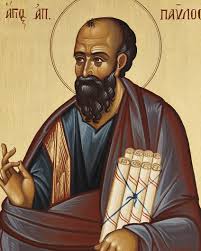 Paul’s letters followed a structure common for the time of writing