The canon of the New Testament: Content and development.

What is the “canon” of the New Testament?

The “Canon of the New Testament” is the catalogue of “twenty-seven books…written in the early years of the Church in response to the life, death and resurrection of Jesus”[1]. Recognised with the forty-six books of the Old Testament as the “Canon of Scripture”, the Church has discerned by its apostolic tradition which writings are included in the list of sacred books[2]. The Canon of Scripture “speaks of Christ, and…is fulfilled in Christ”[3]; the “New Testament lies hidden in the Old and the Old Testament revealed in the New”[4]. This demonstrates a unity between the Old and New Testaments, in the preparation, prophecy, revelation, and fulfilment of God’s plan for redemption and salvation of all people “in the fullness of time in the person of his incarnate Son”[5]. Both are accepted and venerated as being inspired writings, with God as the author[6]laying the foundation of “the rule of faith”[7] for the faithful.

The New Testament consists of four main parts: Gospels, Acts, Letters, and Revelation[8]. The books are not chronological, but ordered to follow the life of Jesus, explore the beginnings and expansion of the Church, highlighting issues and problems in early Christianity before presenting the “End of Times”[9]. In doing so, it reveals the “New Covenant established between God and humanity by Jesus to fulfil the Old Covenant or Mosaic Law”[10].

The Gospels are the “heart of all Scriptures because they are our principal source for the life and teaching of the Incarnate Word”[11]. Matthew’s Gospel provides the connection between Old and New Testaments making it the appropriate book at the beginning of the New Testament[12]. The Acts of the Apostles is a continuation of the Gospel of Luke and follows the story of growth of the Apostolic Church[13]. The Letters, also known as Epistles, consists of twenty-one letters addressing various local problems or issues faced by specific communities, individuals, and the broader Church. They are organised into three sections rather than chronologically: (1) Thirteen letters attributed to Paul to specific communities and individual leaders; (2) Hebrews, a biblical sermon interpreting Jesus through the Old Testament; (3) Seven Catholic Epistles. The Book of Revelation, “a highly symbolic narrative that interprets a historical crisis and provides hope for the future” completes the canon[14].

The development and formation of the canon of the New Testament was formed gradually over time, “some books were accepted, and others were rejected”[15]. Various scholars explain different stages for the formation and transmission of the New Testament, some proposing three stages: historical events, oral tradition, written texts; others five being the three mentioned previously, editing and canonization[16]. Similarities between the three-stage position and the three distinguishing stages in the formation of the Gospels in the Catholic catechism[17]: the life and teaching of Jesus, the oral tradition, the written tradition supports adopting three-stages. Whilst implied, the three-stages do not implicitly take into consideration the “Four Criteria of Canonicity”: Apostolic origin, universal acceptance, liturgical use, and consistent message which were established as to why certain books were accepted while others were rejected unlike the proposed five-stage process through canonization.[18]

Just proposes ten stages in the development and formation of the New Testament: historical Jesus, oral tradition, written sources, written texts, distribution, collection, canonization, translation, application, interpretation, and application[19]. The inclusion of how texts were both collected and distributed throughout the apostolic churches, the influence of translation into various languages, its interpretation and application by the New Testament churches and individuals provides a comprehensive insight into the evolution of the canon, even with considerable chronological overlap.[20] Charpentier proposes that the canon continued to develop through until the fixed final canon in the 4th Century AD, evolving from collections of books starting with Paul’s letters early in the life of the Church, the inclusion of various Gospels (including those to be later rejected) and Catholic Epistles would have then been a later development[21]. Philosophies of the time, including the heresies of Gnosticism and Marcionism in the 2nd century resulted in the delimitation of the canon, evidence of almost being in final form between 150 and 300 CE as seen through several texts including the Muratorian Canon, and writings of Irenaeus, Tertullian, Clement of Alexandria and Origen.[22]


[1] CYB, 1530.

[2] CCC, n120

[3] CCC, n134

[4] CCC, n129

[5] CCC, n122,128

[6] CCC, n136,138

[7] Charpentier, How to Read the New Testament, 119.

[8] Felix Just, The New Testament Canon, Felix Just Website, Published March 21, 2022, https://catholic-resources.org/Bible/NT_Canon.htm

[9] Just, The New Testament Canon.

[10] CYB, 1530

[11] CCC, n125

[12] Harrington, Meeting St. Matthew Today.

[13] Just, The New Testament Canon.

[14] Just, The New Testament Canon.

[15] Charpentier, How to Read the New Testament, 119.

[16] Just, The New Testament Canon

[17] CCC, n126.

[18] Just, The New Testament Canon.

[19] Just, The New Testament Canon.

[20] Just, The New Testament Canon.

[21] Charpentier, How to Read the New Testament, 119-120.

[22] Charpentier, How to Read the New Testament, 119-120.
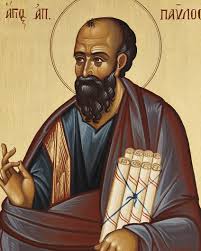
The purpose of St Paul’s letters to early communities: The Letter to the Philippians

Why did Paul write letters to the early communities?

The Letters of St Paul make a significant contribution to the New Testament, the thirteen letters attributed to Paul being the dominant writings after the four gospels[1] as “an essential foundation for Christian theology”[2]. Paul wrote letters to the communities that he founded in response to community questions and moral lapses, giving encouragement and advice based on the gospel[3]. The contents of each letter varied significantly due to the problems experienced by specific communities differing, resulting in each letter being distinctive[4]. A reiteration and development of ethical instructions for Christian living is a consistent message across all letters. Letters encouraged converts to persevere, clarified points of confusion, provided further instruction, and correction for those who had gone astray[5].

Paul’s letters followed a structure common for the time of writing[6]. The address serves a greater purpose than an introduction, Paul regularly alluding to the themes of the letter, “What is uppermost on his mind”[7].The Letter to the Philippians presents no major concerns regarding the community, instead revealing the unique pastoral relationship that Paul has with a community that he founded and loves[8]. Paul longs to be with them, holding them in his heart[9]. An emphasis is placed in remaining joy filled amid suffering[10] and the necessity of unity of minds and hearts inside the community[11]. Paul expresses his desire for the Philippians to experience the “fullness of Christian life: love, knowledge, discernment, good deeds flowing from righteousness, and vindication at the last judgement”[12]. These themes are developed in the area of Christology, ecclesiology, and ethics in the specific context of the community throughout the main body of the letter[13].
The main body teaches and develops the themes from the greeting separated into two distinct sections: teaching and exhortations[14]. Paul is a Pastoral theologian attempting “to understand and articulate the meaning of what God has done in Jesus Christ”[15], by teaching theological concepts not properly understood in the context of the challenges being faced by the community and exhorting the practical consequences, “morality or Christian way of behaving…based on this teaching”[16].

Arguably the most significant contribution of the Letter to the Philippians is the hymn[17]. The hymn “shows that at a very early time in Christian history Christ Jesus was celebrated as sharing the form of God and as a worthy of the divine title “Lord”[18]. It is the theological foundation to the letter, the themes of unity amongst the community, the virtues of communal living, reconciliation amongst members, justification in faith by Jesus’ deeds and not by the outward physical signs of men, and rejoicing amongst suffering[19] are connected and resolved in Paul’s mind through the Cross of Christ “specifically his death and resurrection”[20] through which “everything is a loss because of the surpassing value of knowing Christ Jesus”[21].


[1] Horrell, An Introduction to the Study of Paul, 1.

[2] Daniel Harrington, Paul’s Prison Letters: On Paul’s Letters to Philemon, the Philippians and the Colossians, (New City Press, 1997), 14.

[3] Harrington, Paul’s Prison Letters, 14.

[4] Horrell, An Introduction to the Study of Paul, 44.

[5] Horrell, An Introduction to the Study of Paul, 82.

[6] Charpentier, How to Read the New Testament, 49.

[7] Murphy-O’Connor, Paul a Critical Life, 266.

[8] Harrington, Paul’s Prison Letters, 10.

[9] Philippians 1:7-8 (NRSVCE).

[10] Philippians 1:4 (NRSVCE).

[11] Philippians 1:7; 2:2 (NRSVCE)

[12] Harrington, Paul’s Prison Letters, 37.

[13] Harrington, Paul’s Prison Letters, 14.

[14] Charpentier, How to Read the New Testament, 49.

[15] Harrington, Paul’s Prison Letters, 14.

[16] Harrington, Paul’s Prison Letters, 49.

[17] Philippians 2:6-11 (NRSVCE)

[18] Harrington, Paul’s Prison Letters, 75.

[19] Philippians 2:3; 4:8-9; 4:2-3; 3:2-3; 1:12-19 (NRSVCE).

[20] Horrell, An Introduction to the Study of Paul, 61.

[21] Philippians 3:8 (NRSVCE).

Features of the religious, political, social and economic conditions of life during the New Testament.

The New Testament presents the acts, teachings, Passion and glorification of Jesus Christ as its central focus and the beginning activities of the Church[1] in 1st Century Israel and the Mediterranean[2]. Exploring these times reveals a world of complexity and diversity in the conditions experienced by individuals and communities. The land of Israel, Palestine, was under Roman military occupation, an outpost in the expanding Roman Empire since Pompey’s conquest in 63BCE[3]. The region “fell under the administration of the Imperial Province of Syria… governed by a military governor called a Legate”[4] with troops commonly stationed to keep peace and order. 

The empire was undergoing consolidation, trying to unify its people after through centuries of conquest in a time known as “Pax Romana”, the Roman Peace[5]. The stability of a unified Mediterranean saw local administrators “continue as long as the Roman dominion was not threatened”[6], like Herod the Great and his sons in Palestine. Local customs were integrated and assimilated into the empire as an age of “globalisation where cultures and people…encountered each other in ways never witnessed before… a Greco-Roman veneer to all life…language, architecture, religion, trade, commerce and cultural identity were all influenced”[7].

The Jewish culture was no exception the Greco-Roman influence. “Jews from all walks of life adopted aspects of the Greco-Roman culture…promising a way to political influence and a better station”[8]. This did not overrun the Jewish way of life, adherence to the Torah was still prevalent, they were also “exempt from any obligations which conflicted with the demands of their faith”[9] including exemption from military service, observance of the sabbath, paying annual temple tax and not making sacrifices to the emperor[10].

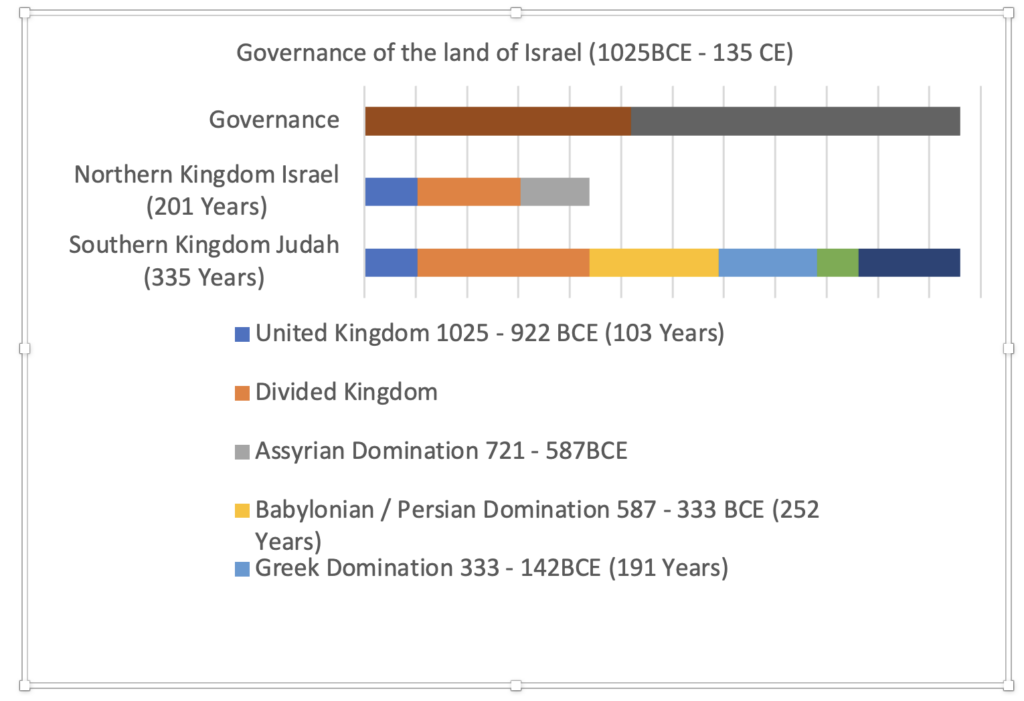
Not all Jews were accepting of Roman rule, passive and active opposition including violence resulted in Palestine being a volatile region. In the previous one thousand years, the land of Israel had been occupied for over half of the time by successive empires[11], Assyrian, Babylonian, Persian, Greek, prior to the Romans contributing to an ever-increasing sense of powerlessness and alienation[12] contributing to Roman resentment. There was a common belief that God would send a Messiah to free Israel from their Roman oppressors[13], establishing God’s Kingdom that the Reign of God would “ensure…justice among the people…[especially] the poor, the oppressed, those who had no voice”[14]. Several messianic claimants calling for intervention against Roman rule resulted, leading to unrest in Jerusalem and the execution of leaders for treason against Rome, “preaching a kingdom that was not Rome threatened the prosperity and stability of the Roman Empire”[15].

Table 1: Ruling control of Israel 1025BCE – 135CE[16]

Judaism was the customary term describing the religious-cultural life of the Jews, the ethnic group who shared the ancestral heritage of the Israelites or Hebrews[17]. At its heart is an understanding of the covenant: the binding relationship initiated by God between God and his people (Israel) through God’s grace. Prosperity and success were promised to those who kept the covenant; being careful to do everything written in the law, keeping it on their lips, meditating on it day and night[18] and keeping it in their hearts[19]. “Most Jews maintained observance of commandments and Laws of the Torah, especially dietary laws, the observance of sacred days and festivals, and refusing to make graven images”[20]. However, a more legalistic view was the motivation, with Judaism losing sight that “membership of the people of God is dependent on God’s grace”[21] with the required obedience to the Law not earning salvation or gaining membership but was the “response to the gracious act of God making a covenant with the people of Israel”[22].

A diverse range of practices and beliefs developed in Judaism throughout the late Second Temple Period “not only between Palestinian and Diaspora Jews… but also between different groups: Pharisees, Sadducees, Essenes, and Zealots”[23]. While belief in the three great pillars of Judaism: the Jerusalem Temple, the land of Israel, and Mosaic Law was shared[24]they “promoted distinctive visions of the past, present, and future of God’s people”[25] due to their difference in understanding what it meant to follow God’s call to be a Holy people[26]

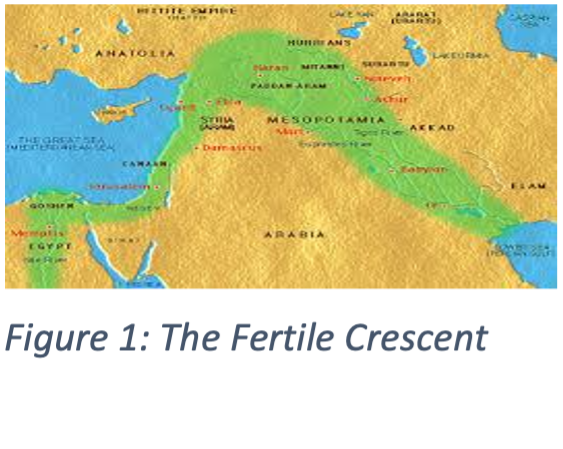
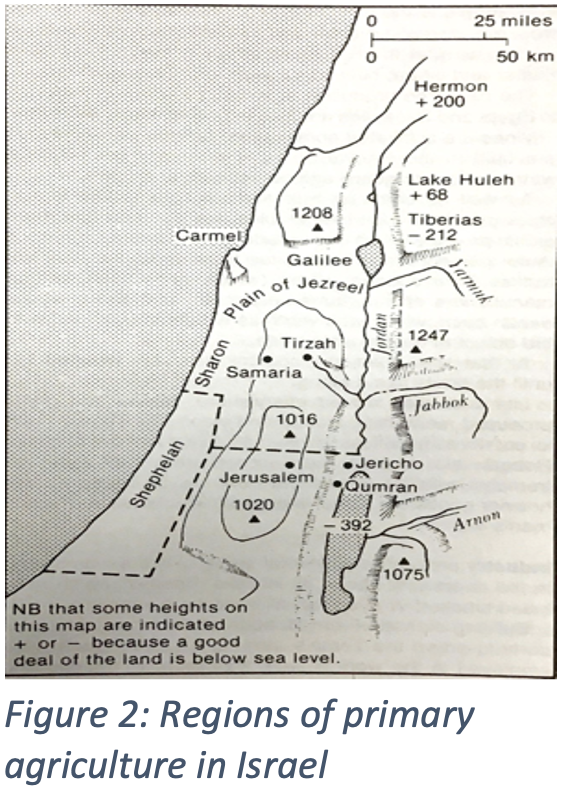
The land of Israel was of religious significance to the Jewish people. It was the land given to them by God as a physical sign of God’s covenant with them[27]. Throughout the Old Testament, the Promised Land is referred to as “flowing with milk and honey”[28], suggesting that it is rich and fertile land able to support a significant population. Located in “The Fertile Crescent”[29], the fertile plains of Jezreel, Sharon and Shephelah, the Jordan valley surrounding Jericho and the terraced farming techniques for stony soils in the hills of Galilee and Judea[30] present a contrary image to the modern arid, stony deserts pictures in Hollywood movies[31].

Additional to the primary industry of agriculture, several other industries were prosperous: fishing in the rivers and Sea of Galilee provided smoked and dried fish all the country[32] and Garum, a fermented fish oil popular throughout the empire [33]; building and construction works on the Temple, the cities of Tiberias, Sepphoris and Julias, and Pilate’s new aqueduct; craftsmen for everyday needs[34]. The vibrancy of the economy should have seen prosperity for many, “taxation and the unjust distribution of wealth”[35] kept most people in debit with wealth held by the sovereign court, Jerusalem priestly aristocracy, great merchants, chief tax collectors and great landowners.[36]


[1] Catechism of the Catholic Church, 2nd edition. (Libreria Editrice Vaticana, 1997), n124 (hereafter cited as CCC)

[2] Dennis Duling, The Jewish World of Jesus: An Overview. (Harcourt Brace Jovanich, 1982), 1.

[3] Etienne Charpentier, How to Read the New Testament. (SCM Press, 1999), 24.

[4] Duling, The Jewish World of Jesus, 4.

[5] Charpentier, How to Read the New Testament, 24.

[6] Francis Moloney, A Friendly Guide to The New Testament. (Garratt Publishing, 2010), 8.

[7] Maurice Ryan, Jesus & the Gospels, (Lumino Press, 2012), 26.

[8] Ryan, Jesus & the Gospels, 26.

[9] Jerome Murphy-O’Connor OP, Paul a Critical Life, (Oxford University Press Inc., 1996), 41.

[10] Duling, The Jewish World of Jesus, 4.

[11] The Catholic Youth Bible International Edition New Revised Standard Version Catholic Edition, (Saint Mary’s Press, 2019), 1548-1549. (Hereafter cited as CYB)

[12] Duling, The Jewish World of Jesus, 10.

[13] Rebecca Denova, Jesus Christ, World History Encyclopedia Website. Published on Jan 05, 2021, https://www.worldhistory.org/Jesus_Christ/

[14] Charpentier, How to Read the New Testament, 65.

[15] Denova, Jesus Christ, 2.

[16] CYB, 1548-1549.

[17] Duling, The Jewish World of Jesus, 1. 

[18] Joshua 1:8 (NRSVCE)

[19] Psalm 40:8 (NRSVCE)

[20] Ryan, Jesus & the Gospel, 26

[21] David G Horrell, An Introduction to the Study of Paul, 2nd edition, (T&T Clark, 2006), 93.

[22] Horrell, An Introduction to the Study of Paul, 93.

[23] Horrell, An Introduction to the Study of Paul, 5.

[24] Daniel J Harrington SJ, Meeting St. Matthew Today: Understanding the Man, His Mission, and His Message, (Loyola Press, 2010), 6.

[25] Ryan, Jesus & the Gospel, 163.

[26] Horrell, An Introduction to the Study of Paul, 5.

[27] Albert Nolan, Jesus before Christianity, (Orbis, 1993)

[28] Exodus 33:3 (NRSVCE)

[29] National Geographic Education, The Fertile Crescent, (National Geographic Society, 2023). Retrieved from https://education.nationalgeographic.org/resource/fertile-crescent/#:~:text=fertile%20crescent%20illustration&text=Its%20area%20covers%20what%20are,runs%20through%20part%20of%20it.

[30] Charpentier, How to Read the New Testament, 26.

[31] Ryan, Jesus & the Gospels, 27.

[32] Charpentier, How to Read the New Testament, 26.

[33] Ryan, Jesus & the Gospels, 35.

[34] Charpentier, How to Read the New Testament, 26.

[35] Charpentier, How to Read the New Testament, 26.

[36] Charpentier, How to Read the New Testament, 26.